The global beauty market is expanding, but attractive packaging does not guarantee a dependable facial device. McKinsey’s 2023 beauty market analysis valued the sector at about $446 billion and projected it could reach $590 billion by 2028. That growth encourages many suppliers to enter the facial-care device category, including manufacturers in China. More choices help buyers. They also create uncertainty.
So, how to identify a quality facial massager when product pages show similar images and identical promises? Look beyond surface claims. A credible supplier should explain the motor type, vibration frequency, operating temperature, battery capacity, charging protection, and skin-contact materials. Ask for batch records, factory quality procedures, and recent testing from an independent laboratory. ISO 9001 certification can indicate a controlled management system, but it does not prove that every device is safe or effective.
Details matter. Check whether the silicone head feels uniform, whether seams catch on dry skin, and whether the motor remains stable after ten minutes. Test the charging port for looseness. Review the user manual for clear warnings, cleaning instructions, and realistic usage limits. NIQ’s 2024 beauty insights emphasize consumers’ growing demand for transparency and trusted product information, making traceability commercially important. Still, paperwork can be incomplete. A certificate may cover another model. I have seen buyers trust logos too quickly. That is a mistake worth admitting. A practical evaluation combines supplier experience, physical samples, documented testing, and careful follow-up before placing a larger order.
Define the Features of a Quality Facial Massager
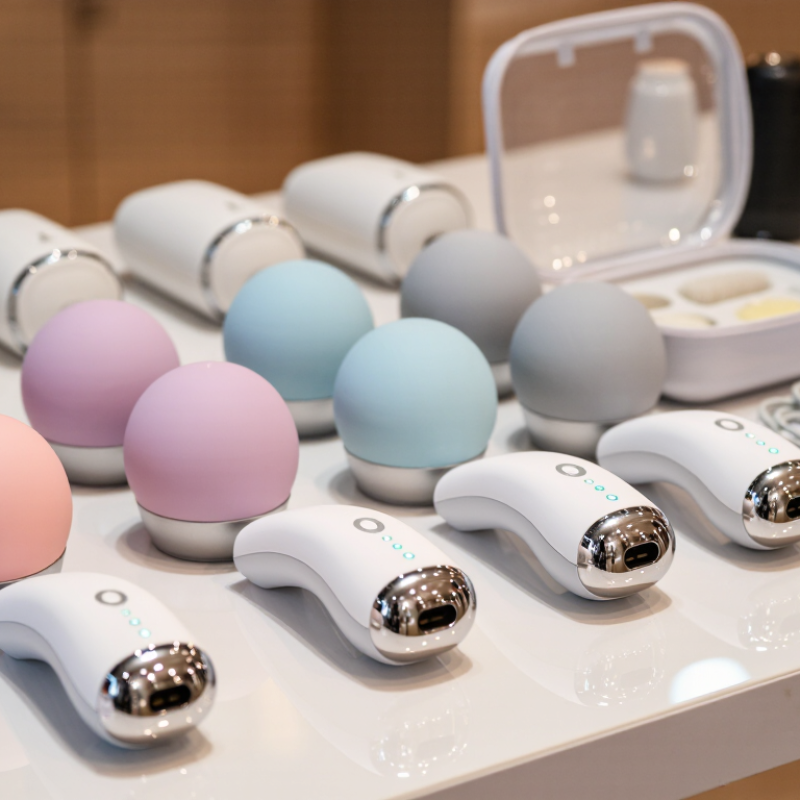
A quality facial massager from China should feel solid, balanced, and comfortable in the hand. The surface should be smooth, without sharp seams, loose parts, or strong chemical odors. Skin-contact materials should be clearly identified and supported by safety documentation. Food-grade silicone or carefully finished metal can be suitable, but material names alone are not enough. Ask for test reports from independent laboratories.
The motor should provide steady movement rather than harsh vibration. A useful device offers several intensity levels, simple controls, and a timer that prevents excessive use. It should remain reasonably quiet during operation. Check whether the battery charges consistently and whether the charging port is protected from moisture. A clear user manual is another important feature. It should explain cleaning, storage, skin sensitivity, and recommended session time.
I once judged a product by its attractive packaging. That judgment was incomplete. A reliable supplier should provide production records, quality-control procedures, and samples from regular manufacturing batches. Ask how the device is tested before shipment. Drop testing, charging checks, vibration testing, and surface inspections reveal more than photographs. The cheapest sample may not represent future orders. Request several units and compare their weight, sound, finish, and performance. Small differences matter. Yet even this approach has limits, because long-term durability requires repeated use. A careful buyer should record defects instead of trusting first impressions.
Check the Materials, Design, and Manufacturing Details
How to Identify a Quality Facial Massager from China?
Check the Materials, Design, and Manufacturing Details
A reliable facial massager begins with verified materials, not attractive packaging. Ask whether the contact surface uses skin-safe silicone, stainless steel, or another documented material. “Safe” should be supported by test records, not only a supplier’s statement. Examine the surface closely. It should feel smooth, without sharp edges, cracks, strong odors, or uneven coloring. A small flaw can become uncomfortable during repeated use.
Design details reveal practical quality. The handle should feel balanced and remain secure when your hands are wet. Moving parts should operate quietly, without grinding or excessive looseness. For rechargeable models, check the charging port, battery protection, and water-resistance claims. Do not assume a sealed appearance means safe water use. Request test conditions and written specifications. Look closely.
Manufacturing discipline matters just as much as the product itself. Ask for a production sample, inspection checklist, batch records, and material certificates. Confirm whether workers check polishing, assembly, charging, and surface cleanliness at several stages. A capable factory should explain its mold control and final quality checks clearly. During evaluations, I have found that attractive samples sometimes hide inconsistent finishing in later batches. That is easy to miss. Compare samples from different production dates, and question any unexplained change in weight, texture, or vibration. Even a professional inspection can miss defects, so independent testing remains worthwhile.
Evaluate Performance, Safety, and User Comfort
A quality facial massager from China should prove performance, safety, and comfort through evidence. McKinsey’s 2023 beauty report forecasts the global beauty market could reach about $590 billion by 2028. Rising demand makes careful testing more important. Check whether the device delivers stable vibration, consistent heat, and even contact across the face. During inspection, run it for 15 minutes. Watch for sudden noise, uneven movement, or uncomfortable surface heating. A polished box can mislead.
Safety needs more than a compliance logo. Ask for independent laboratory reports covering electrical safety, battery protection, and skin-contact materials. ISO 10993-1 provides a recognized framework for evaluating biological safety. IEC 62366-1 addresses usability risks, including confusing controls and poor instructions. Confirm the charging port, cable, and battery remain cool during repeated cycles. Also inspect cleaning guidance. Moisture trapped around seams can create hygiene problems. I would not trust one sample alone; batch consistency deserves separate verification.
Tips: Choose adjustable intensity, rounded edges, and a quiet motor. Test the lowest setting on clean skin first. Stop if redness lasts. Request a sample from the planned production batch, not only a showroom unit. Compare measured heat and vibration with the supplier’s claims. User comfort is not cosmetic; it affects whether people use the device safely and regularly.
Verify Chinese Supplier Credentials and Product Standards
A quality facial massager from China begins with supplier verification, not attractive packaging. Ask for the business license, unified social credit code, factory address, and export history. Check the company through China’s National Enterprise Credit Information Publicity System. Match its registered scope with its manufacturing claims. A trading company may be legitimate, but it should disclose the actual factory. Request production photos and a live factory call. Look for labeled parts, clean assembly benches, and batch records. Details matter. Not proof.
Verify certificates in the national certification database, not only in a PDF. The ISO Survey 2023 reports more than one million ISO 9001 certificates worldwide. However, ISO 9001 evaluates management systems, not facial comfort or electrical safety. For powered devices, request test reports against applicable GB electrical safety requirements. Check China RoHS documentation, including GB/T 26572 where relevant. Confirm the model number, voltage, testing date, laboratory accreditation, and report scope. For skin-contact materials, request material declarations and suitable irritation or migration testing. A report covering another model is a quiet warning.
Order samples from the stated factory before payment. Compare them with the mass-production specification. Check vibration consistency, charging temperature, noise, surface finish, and instructions. Keep photographs and written acceptance criteria. A supplier may pass one inspection and still drift later. Add pre-shipment inspection and random batch testing. Ask for failure-rate data, although suppliers may provide incomplete figures. That gap deserves discussion, not automatic rejection.
Compare Samples, Pricing, Warranty, and Customer Support
A quality facial massager from China should be judged through samples, not photographs alone.
Request two or three units from the same production batch. Check the surface finish, button response, vibration consistency, and charging port. Hold the device against your jaw and cheek for several minutes. It should feel balanced, quiet, and comfortable. Ask for material details and test reports. Clear technical answers show practical knowledge, not just sales language.
Compare pricing with care.
A low quote may exclude packaging, spare parts, inspection, or shipping. Request a written breakdown covering unit cost, minimum order quantity, tooling, and delivery time. Compare identical specifications. I once focused on the cheapest sample and overlooked its weak charging cable. That mistake changed my checking process. A slightly higher price may provide better motors, safer batteries, and steadier quality control.
Warranty terms reveal how dependable the supplier may be.
Confirm the coverage period, excluded damage, replacement rules, and evidence requirements. Ask who pays return shipping for confirmed defects. Customer support should answer technical questions within an agreed timeframe. Test this before placing an order. Send specific questions about noise, battery life, and cleaning. Vague replies deserve caution. Keep every promise in writing. Supplier references can help, though references are never perfect. One missed detail can become an expensive problem.
Conclusion
Learning how to identify a quality facial massager from China begins with understanding the product’s essential features, such as suitable massage functions, ergonomic shape, easy operation, and a design that supports different skincare routines. Carefully examine the materials, surface finish, assembly quality, and manufacturing details. Durable, skin-friendly materials, smooth edges, secure components, and consistent workmanship are important indicators of reliability. Performance should also be evaluated through massage effectiveness, operating stability, noise level, battery life, temperature control if applicable, and overall user comfort. Safety features, clear instructions, and easy cleaning should never be overlooked.
When assessing a Chinese supplier, verify its business credentials, production capabilities, quality management processes, and compliance with relevant product standards. Comparing samples from several suppliers can reveal differences in quality, function, and consistency. Pricing should be reviewed alongside material quality, customization options, warranty coverage, delivery terms, and customer support. A dependable supplier should communicate clearly, provide transparent documentation, respond efficiently, and offer reasonable after-sales assistance. This structured approach helps buyers make a confident and practical purchasing decision.
 AOF Beauty
