AOF Beauty
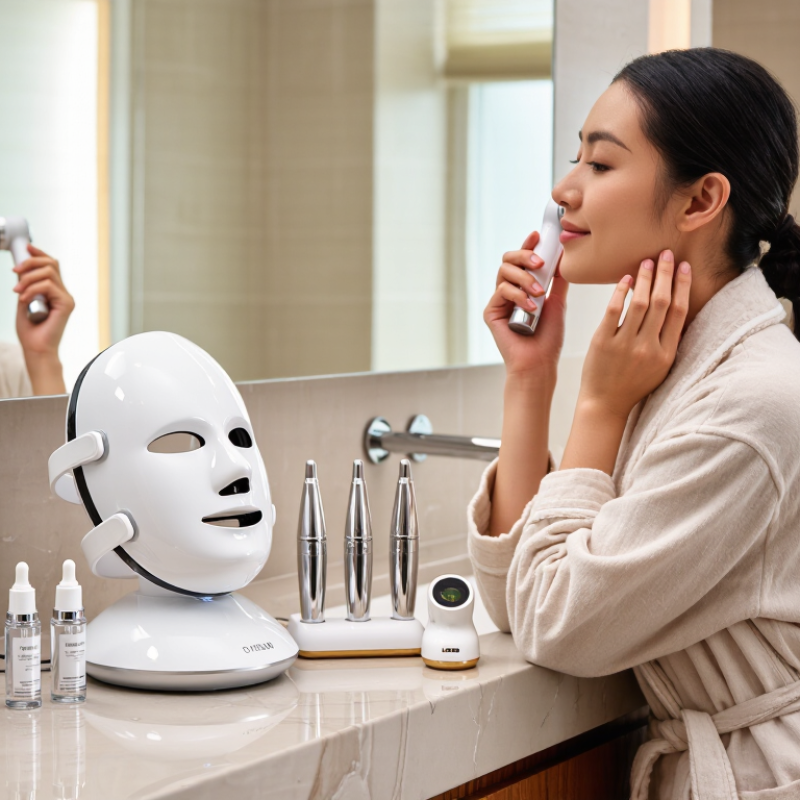
Home beauty devices have moved from niche gadgets to visible bathroom essentials. A facial LED mask now sits beside cleansers, while microcurrent tools appear in ordinary evening routines. But why are home beauty devices growing in popularity? Convenience is a major explanation. Consumers can use these products at home, often while watching television, without scheduling clinic appointments. Personalization also matters. Many devices offer adjustable intensity, treatment timers, smartphone guidance, or routines designed for specific skin concerns.
Market data supports this shift. Grand View Research estimated the global home-use beauty devices market at approximately USD 18.36 billion in 2023. Its report also projects an 18.8% compound annual growth rate from 2024 to 2030. Meanwhile, McKinsey’s 2023 beauty industry analysis identified wellness, personalization, and technology as important forces shaping consumer decisions. These findings suggest more than temporary curiosity. They indicate a wider movement toward accessible, technology-supported self-care.
Guive Balooch, Global Head of L’Oréal’s Technology Incubator, has described the direction clearly: “Beauty tech is the future of beauty.” His view reflects the industry’s investment in connected tools and measurable routines. Still, popularity does not equal proven performance. Results can vary with skin type, device quality, treatment frequency, and user technique. Some claims also sound stronger than the available clinical evidence. That deserves attention. The most reliable choices should include transparent instructions, credible testing, realistic expectations, and appropriate safety guidance. This article examines the top ten reasons behind the category’s growth, while considering both its practical appeal and its unfinished questions.
Home beauty devices are tools designed for personal care outside professional clinics or salons. They may support cleansing, hair removal, light-based skincare, massage, nail care, or gentle skin stimulation. Some are electronic, while others use simple mechanical action.
The category is not perfectly clear. A facial roller and a light-based device may both be sold for home use, yet their risks and expected results differ. Reliable information should explain the device’s purpose, operating method, treatment limits, and safety instructions. Evidence also matters. A device may improve temporary skin smoothness without treating a medical condition. Users should not confuse cosmetic support with clinical care.
Tips: Check the instructions before each session. Use protective eyewear when required. Avoid damaged skin, and stop if burning or unusual pain occurs. Keep devices clean and dry. Record how often you use them and observe changes over several weeks. Individual results vary, sometimes more than advertisements suggest. People with sensitive skin, implanted electronic devices, or ongoing treatments should seek qualified medical advice before use. Even careful users can misjudge their skin’s response. That is worth remembering.
Home beauty devices fit around real life. A ten-minute session can happen before breakfast or after work. No appointment, traffic, or waiting room is required. This convenience supports flexible personal routines, especially for people managing childcare, long commutes, or irregular schedules. McKinsey & Company’s Future of Wellness 2024 report valued the global wellness market at approximately $1.8 trillion. The figure reflects rising interest in personal care, but it does not prove that every device delivers equal results.
Time savings also influence buying decisions. Users can follow a simple routine while listening to a podcast or preparing tomorrow’s clothes. Repeated use may feel more manageable than occasional professional visits. Still, convenience can encourage overuse. That assumption needs reflection. Results often depend on correct technique, suitable settings, and consistent hygiene. Personal experience matters, but it should not replace professional advice for persistent irritation or skin conditions.
Tips: Read the instruction manual carefully. Start with the lowest suitable setting. Clean the device after each use, and avoid sharing it. Track changes with weekly photos under similar lighting. Stop if burning, swelling, or lasting redness appears. The American Academy of Dermatology recommends seeking qualified medical guidance when symptoms continue. A flexible routine should support your skin, not pressure it.
Sources: McKinsey & Company, Future of Wellness 2024; Global Wellness Institute, Global Wellness Economy Monitor 2024.
Home beauty devices are popular because they make salon-inspired care easier to reach. A small device can sit beside a bathroom mirror, ready after work. This helps when travel, appointment fees, and waiting lists become inconvenient. Over time, repeated home sessions may cost less than regular salon visits, especially for basic maintenance. The real value depends on consistent use, not the excitement of the first week. That is easy to forget.
Tips: Compare the device price with several months of professional appointments. Check replacement parts, cleaning needs, and recommended usage before buying. Read independent instructions carefully, and avoid using a device on irritated or damaged skin. Start with the lowest suitable setting. Slow progress is still progress.
Access is another strong advantage. Users can follow a routine at a convenient time, even in smaller towns or during busy weeks. However, home treatment is not identical to professional care. Salon professionals can assess skin conditions, adjust techniques, and notice problems early. Some devices may also produce limited results when used incorrectly.
I would record dates, settings, and skin reactions for several weeks. That simple log makes expectations more realistic and reveals whether the expense is genuinely worthwhile. Efficiency should include safety, time, and results.
Technological innovation has made home beauty devices more precise and convenient. Sensors can adjust intensity, while timers support consistent treatment lengths. Some devices combine light, warmth, vibration, or gentle electrical stimulation. These functions may help users manage common concerns, including dullness, uneven texture, and temporary puffiness. However, results depend on the device, skin condition, and regular use. They are not instant miracles.
Personalization makes the experience feel more practical. Users can often select settings based on sensitivity, comfort, or treatment goals. Tips: Clean the device before use. Start with the lowest comfortable setting. Follow the instructions carefully, and patch-test products when recommended. Take photos under similar lighting every few weeks. This creates a more reliable comparison than memory. Avoid treating irritated skin, and seek professional advice when persistent redness or pain appears.
Visible results also explain the growing interest. After several weeks, some users notice smoother-looking skin or a brighter appearance. Clinical evidence varies, so advertising claims deserve careful evaluation. In practice, consistency usually matters more than dramatic settings. A ten-minute routine may fit better than an ambitious plan that gets abandoned. Progress can be uneven. Sleep, stress, hormones, and skincare products also affect what appears in the mirror. Home devices offer control, but they still require patience, realistic expectations, and informed choices.
Top 10 Reasons Why Home Beauty Devices Are Popular?
Home beauty devices attract users through convenience, privacy, and increasingly personal routines. Grand View Research estimated the global home-use beauty devices market at about USD 18.5 billion in 2023. It also projects growth of nearly 16% annually through 2030. This momentum reflects stronger consumer interest in skincare technology and salon-style care at home.
Safety still shapes long-term market appeal. Light-based devices may react differently across skin tones, hair colors, medications, and recently tanned skin. The U.S. Food and Drug Administration advises users to follow product instructions and stop after unexpected reactions. Dermatology guidance also supports patch testing and careful sun protection. A warm device on clean skin may feel harmless, but irritation can appear hours later. Results are often modest. That is less exciting, but more honest.
Tips: Read the full manual before use. Check local authorization requirements. Avoid sharing devices without proper cleaning. Use protective eyewear when instructed. Record treatment dates, settings, and skin responses. This simple log can reveal overuse. It can also expose unrealistic expectations. Users with persistent redness, pain, or swelling should seek qualified medical advice. The American Academy of Dermatology emphasizes professional evaluation when skin changes do not settle. Market growth is real, yet safety depends on the person holding the device.
| No. | Reason for Popularity | Consumer Appeal | Relevant Data or Fact | Safety and User Considerations | Evidence Context |
|---|---|---|---|---|---|
| 1 | Convenience and Time Flexibility | High | At-home devices can be used during a user-selected routine without travel or clinic appointment scheduling. Treatment time varies by device type and treatment area. | Users should follow the manufacturer’s treatment schedule and avoid extending sessions in an attempt to accelerate results. Overuse may increase irritation, dryness, or heat-related discomfort. | Supported by the practical design of home-use devices and standard consumer-use instructions for light-, heat-, and energy-based products. |
| 2 | Greater Privacy and Personal Control | High | Home treatment allows users to choose the location, timing, and frequency of use without receiving treatment in a public or clinical setting. | Privacy does not replace professional assessment. New, changing, painful, or bleeding skin lesions should be evaluated by a qualified healthcare professional rather than treated cosmetically. | This is a user-experience advantage rather than a clinical efficacy measure. |
| 3 | Lower Long-Term Access Barrier | High | A reusable device may reduce the need for repeated appointments after the initial purchase, although the total cost depends on device price, replacement parts, electricity, and required maintenance. | A lower access barrier can encourage self-treatment. Users should check return policies, warranty coverage, electrical safety information, and whether the device is intended for home use. | The economic benefit is highly individual and should not be presented as a guaranteed saving compared with professional treatment. |
| 4 | Non-Invasive or Minimally Invasive Options | High | Many home devices use surface-level light, cleansing vibration, radiofrequency, microcurrent, or mechanical exfoliation rather than needles or surgical incisions. | Non-invasive does not mean risk-free. Possible adverse effects include temporary redness, irritation, burns, pigment changes, eye injury, or discomfort depending on the technology. | Risk profiles differ substantially among LED, IPL, radiofrequency, microcurrent, ultrasound, and exfoliation devices. |
| 5 | Improved Access to Light-Based Skincare | High | Red and near-infrared light devices are commonly marketed for cosmetic skin concerns, while blue-light devices are commonly associated with acne-related applications. Results depend on wavelength, dose, consistency, and the condition being treated. | Eye protection should be used when required. Users taking photosensitizing medication or managing a photosensitive condition should seek medical advice before using light-based devices. | Clinical evidence exists for some light-based applications, but home-device results may not be equivalent to professionally administered treatment. |
| 6 | Personalized and Adjustable Routines | High | Many products offer adjustable intensity, treatment modes, interchangeable heads, or application areas, allowing routines to be adapted to different comfort levels and skin concerns. | Higher intensity is not automatically more effective. Users should begin at the lowest suitable setting, perform a patch test when recommended, and stop if persistent pain or unusual skin changes occur. | Personalization improves usability, but settings should remain within the device’s tested operating range. |
| 7 | Easy Integration into Existing Routines | High | Home devices can be incorporated into established skincare or grooming routines, including cleansing, moisturizing, hair removal, or scheduled light treatments. | Product compatibility matters. Certain active ingredients, exfoliants, fragrances, or recently performed cosmetic procedures may increase irritation or photosensitivity. | Routine compatibility is dependent on the technology, treatment intensity, and the user’s skin condition. |
| 8 | Growing Interest in Preventive Self-Care | Medium–High | Consumers increasingly use home-care tools as part of regular maintenance rather than waiting for a specific cosmetic concern to become severe. | Preventive skincare should still include daily sun protection, gentle cleansing, moisturization, and professional evaluation when symptoms are persistent or worsening. | This reflects a broad consumer-behavior trend; it does not establish that every device prevents skin aging or disease. |
| 9 | More Options for Different Skin and Hair Characteristics | Medium–High | Device suitability can vary with skin tone, hair color, hair thickness, sensitivity, and the intended treatment. For example, light-based hair-removal performance depends partly on the contrast between hair pigment and surrounding skin. | Some IPL and laser-like devices may be unsuitable for very dark or recently tanned skin because of increased risk of burns or pigment changes. Users should verify the permitted skin-tone range. | Suitability should be assessed from the device instructions and, when uncertain, by a qualified professional. |
| 10 | Repeatable Maintenance and Habit Formation | High | Many home beauty technologies require repeated use over several weeks or ongoing maintenance because cosmetic effects may diminish when treatment stops. | Consistency should not become excessive use. Users should record treatment dates, monitor skin response, clean contact surfaces, and replace parts according to the instructions. | Repeated-use requirements are common across light-based, hair-removal, cleansing, and skin-toning categories. |
Important: Home beauty devices vary considerably in technology, intensity, intended use, and regulatory status. The information above is general consumer guidance, not a substitute for medical advice. Always read the product instructions and consult a qualified healthcare professional if you have a skin condition, implanted electronic device, photosensitivity, are pregnant, or use medication that may affect light or heat sensitivity.
They support personal care outside clinics or salons. Uses may include cleansing, massage, hair removal, nail care, or gentle stimulation.
Usually, no. They may improve temporary smoothness, but cosmetic support is not clinical treatment.
Read the instructions before each session. Start with the lowest suitable setting. Begin gently.
Stop after burning, unusual pain, swelling, or lasting redness appears. Do not continue through discomfort.
Clean the device after every use. Keep it dry. Avoid sharing it, even with family members.
Track use over several weeks. Take weekly photos under similar lighting. Results vary considerably.
A ten-minute session can fit before breakfast or after work. No appointment or travel is needed.
Yes. Flexible routines may encourage overuse. I might expect faster results than the evidence supports.
People with sensitive skin, implanted electronic devices, or ongoing treatments should seek qualified advice first.
No. Personal results can be useful observations, but they cannot replace safety guidance or professional evaluation.
Home beauty devices are personal-care tools designed for use at home, offering functions such as skincare support, hair removal, cleansing, and appearance enhancement. Their growing popularity reflects the way they fit modern lifestyles: users can create flexible routines, save travel time, and enjoy beauty care whenever it suits their schedules. These devices may also reduce the repeated cost of salon visits while making salon-inspired treatments more accessible in everyday settings.
So, why are home beauty devices growing in popularity? Advances in technology have made many products easier to operate, more customizable, and capable of producing noticeable results when used consistently and correctly. Adjustable settings can help users match treatments to their comfort levels and personal goals. However, users should always follow product instructions, consider their skin or health conditions, and use suitable safety precautions. As consumers seek convenience, personalization, and practical value, the home beauty device market continues to attract growing interest.